
In this blog, Summer Baker and Ayela Inayat reflect on their first experience of conducting extended archival research as History students. Involved in a project on ‘Recovering Patient Voices in Britain, 1812-1918′, they discuss what it was like to uncover, and work with, asylum patients’ letters, and some of their insights from their research.
Summer Baker
The Historian Roy Porter, in his 1985 article Doing Medical History From Below states that ‘it takes two to make a medical encounter’. (1) However, a large portion of the archival material we have on asylum life offers a professionalised point of view. This often means that the voices of in-patients themselves remain marginalised in the historical record, with their own experiences often filtered though the perspectives of medical practitioners who interacted with them, leaving traces of these encounters from a medical perspective. Therefore, this project ultimately has worked to recover the voices of mental health in-patients; This was something we sought to do by recovering material written by patients themselves, predominantly though letters. These letters were sometimes preserved in asylum records, such as in casebooks, and were usually used as evidence of the mental state of patients.(2)However, they can be utilised with a new purpose in mind; to find patients own subjectivities and views on asylum life.
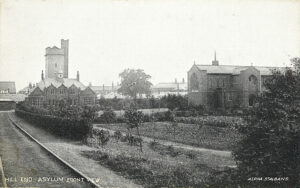 Trying to reinsert patient perspectives back into asylum histories made the process of researching the project a greatly emotive experience. It was moving to be able to read letters which allowed glimpses into the lives of patients and their relationships with others, things which we would otherwise not usually be able to access. This was apparent from the very start of the project, such as visiting the Hertfordshire Archives to look at the casebooks of Hill End Asylum. One such find was a patient whose letters had been preserved: Dr Herbert Walter French was a particularly memorable case, as not only was Herbert in the asylum, but also a potential relative of his; Winifred Ethel French was also a patient in Hill End at a similar time to Herbert, but there were no letters of hers preserved. There was a photograph of her, however, and it was so striking to find because Winifred had become an in-patient at the age of 8, highlighting family relationships and children in the asylum system. More broadly, the presence of photographs in casebooks, both in Hill End and in other hospitals, truly transformed our project from a search for information to something intimate and personal where we were engaging with the lives of people despite the span of over a hundred years between us. This emotional connection is something which many historians such as Matt Cook have discussed in their archival work. (3)
Another key point of reflection for us throughout the project was the ethics of our research and what it meant for the people who were being centred. This is because of the marginalisation of in-patients both in their own lives and in asylum records themselves. (4)Thus, it was vital to consider this at all points of our research, from looking at material in the archives to transcribing the words of the patients we found in the letters; we had a responsibility to respect the agency and dignity of patients so as not to replicate their marginalisation. It was important to take care with their stories, using letters to find their voices and not to pass judgment, to listen to what they had to say and take it seriously as a testimony of their own experiences.
Ayela Inayat
Letters from Hanwell Asylum, accessed at the London Archives, reveal that female patients were rarely acknowledged purely as individuals experiencing mental ill health, instead their institutionalisation was shaped by expectations of femininity.
This is particularly evident in how relatives described patients to medical staff. Ruth Maddock’s father, for example, emphasised her character as sober, chaste and honest, while Harriett Joel’s family praised her domestic and needlework skills before she became increasingly ‘excited’. Such descriptions suggest that women’s distress was understood through their ability to perform respectable behaviour within their roles as wives, mothers, daughters and domestic workers. Pregnancy and childcare were central to narratives of female mental distress. While some patients experienced what would now be recognised as post-partum depression or psychosis, definitively gendering the cause of their mental ill health, family members sometimes emphasised tumultuous romantic lives to medics, the relevance of which was not necessarily supported by the patients themselves.
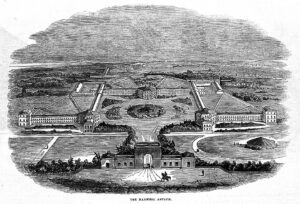
The letters also reveal how poverty shaped women’s experiences of institutionalisation. As Hanwell primarily housed ‘pauper’ patients, families often struggled to provide the support that patients sought after. Ruth Maddock’s father explained that her brother was short of time and money and that his own infirmity and poverty prevented him from assisting her. He described the ‘sleepless nights’ his family had endured over Ruth’s admittance and Ruth’s ‘abusive’ letters demanding to be released, highlighting the emotional and financial strain that institutionalisation could cause. Similarly, Sarah Ann Whitehouse’s sister wrote to medical staff simply stating, ‘I have a large family I am not able to come’, while Susan Wrighty Newing’s relative described financial difficulties and unemployment that had forced the family to seek parish assistance for themselves and Susan’s institutionalisation, writing that he was unable to ‘provide her with a Private Asylum.’ These accounts reveal the material constraints surrounding accessible and sufficient institutional care, and how this could cause interpersonal strain in ‘pauper’ families through direct conflict or absence.
Letters from patients also reveal women resisting the descriptions imposed upon them. Cecilia Horne was described as ‘argumentative’ and indignant at being governed, while her attempts to escape and expressed desire for freedom resisted institutional authority. Labels such as ‘headstrong’ and ‘argumentative’ reflected expectations of appropriate feminine behaviour, in contrast to ‘sober’ or ‘chaste’. Ruth Maddock, in a letter written before a suicide attempt, insisted that she was ‘not mad and never had been’, and argued that the asylum had deteriorated her mental health by depriving her of her home, money, clothing and freedom. Tragically, the existence of her letters in Archival casebooks demonstrates that the Asylum indeed restricted her freedom to express her experiences to her family. Furthermore, her self-description as a ‘Pauper Lunatic’ may appear to accept an imposed label, however her use of the term as inherently self-deprecating also demonstrates a contemporary awareness of the stigma attached to this legal category.
Transcribing and analysing these letters has led us to question the role of a historian. In one medical letter, Ann Snoswell’s belief that a wealthy family member could secure her discharge was dismissed by her husband as ‘pure delusion’. This raises the question of whether historians can or should attempt to extract lucidity from what was medically classed as delusion; Does Ann’s denial of the material reality that sustained her confinement demonstrate a strong desire to escape, or should any underlying meaning in her delusions be dismissed as a symptom of temporary irrationality?
Ultimately, these letters reveal how women’s experiences of mental ill health were understood through their roles as ‘respectable’ or ‘difficult’ wives, mothers and daughters. Yet they also preserve women’s articulations of their own experiences, allowing greater understanding of the women previously sidelined by institutional records.
Conclusion
A major theme throughout our research, one that was particularly highlighted when we used Nvivo, was interpersonal relationships. Some of the letters we found were written by patients to asylum staff, which offers a new way of thinking about encounters, often told from a medicalised perspective. A large number of the letters that we found, however, where written to people outside of the asylum, such as relatives, spouses or friends. This highlights the close nature of these relationships and how they remained important to patients even when they were institutionalised. The prevalence of these letters also suggests that asylums were not completely closed institutions, remaining connected to the outside world, unlike previous stereotypes have suggested.
Furthermore, the project has placed a particular spotlight on the theme of gender. Previous surveys of patient letters, like that of Allan Beveridge, have suggested that letters written by male patients significantly outnumbered those written by female patients. (5) However, the project has highlighted the presence of women within asylum letters; Not only are women mentioned in letters very frequently, as suggested by NVivo analysis, but a large number of letters we found where written by female patients themselves. This is particularly important because it sheds light on the voices of women at the intersection of gendered and institutional marginalisation.
References:
1. Porter, Roy. “The Patient’s View: Doing Medical History from Below.”, http://www.jstor.org/stable/657089, p175
2. Beveridge, Allen, Life in the Asylum: patients’ letters from Morningside, 1873-1908. doi:10.1177/0957154X9800903602
3. Cook, Matt. “‘Archives of Feeling’: The AIDS Crisis in Britain 1987.”, http://www.jstor.org/stable/44645657
4. For more Information about asylum life https://www.sciencemuseum.org.uk/objects-and-stories/medicine/victorian-mental-asylum
5. Beveridge, Life in the Asylum, 436