The Sacred Home

Mary Laven is Professor of Early Modern History at the University of Cambridge and a Fellow of Jesus College. She is a social and cultural historian of early modern Italy and Europe, with particular interests in religion, gender, sociability, and material culture. She is the author of ‘Virgins of Venice: Enclosed Lives and Broken Vows in the Renaissance Convent’ (Viking Penguin, 2002) and ‘Mission to China: Matteo Ricci and the Jesuit Encounter with the East’ (Faber and Faber, 2011).

In her contribution to the Research Exchange, she reflects on the challenges of writing the social history of the Renaissance and the benefits of collaborative research. Her new book ‘The Sacred Home in Renaissance Italy’ was co-written with Abigail Brundin and Deborah Howard and published in July 2018 by Oxford University Press.

Early Modern Siblings

Bernard Capp is Emeritus Professor of History at the University of Warwick. He is a leading authority on everyday life in early modern England, having written books on the family, gender, radical movements in the English Revolution, the impact of puritan rule during the interregnum, astrological almanacs, popular literature, and the Cromwellian navy.

In his contribution for the Research Exchange, he reflects on the subject of early modern siblinghood at the publication of his new book ‘The Ties that Bind: Siblings, Family, and Society in Early Modern England’ (published by Oxford University Press on 12 July 2018).

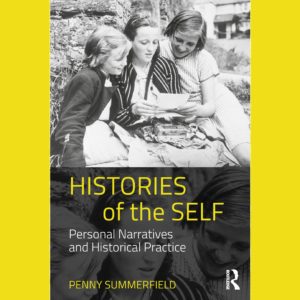
Histories of the Self

Penny Summerfield is Emeritus Professor of Modern History at the University of Manchester and Honorary Vice-President of the Social History Society. Her work on the Second World War has been hugely influential both in relation to how oral histories are used and the wider historical scholarship around the formation of gender identities.

To coincide with the publication of her new book, ‘Histories of the Self: personal narratives and historical practice’ (published by Routledge on 12 July 2018), she’s been in conversation with the Social History Exchange editor about this new book and how it fits into her wider body of work.