
By Stephen Dunning, University of Exeter
The air was fresh and the sunshine warm. The old Dutch fort, its red flag flying from the battlements, was covered with creepers and surrounded by luscious green foliage, a welcome sight after the barren sandy stretches of coast. The shoreline bustled with Swahili and Arab traders, merchants, dock workers, and boatmen.
It was 8 o’clock on the morning of July 13th, 1896. After a month at sea in cramped quarters and accompanied by five military surveyors from the Indian Army, brothers Richard and Arthur Church had finally arrived in Mombasa on the east coast of Africa. After breakfast and clearance by the port surgeon and British India Company agents, who declared there were no cases of plague on board, Richard and Arthur stepped ashore into what was then known as the British East Africa Protectorate.[1]
In 1896, Mombasa was part of the Sultanate of Zanzibar, while the mainland of what is now Kenya was the British East Africa Protectorate. Richard and Arthur joined British, Indian, and African workers building the Kenya-Uganda Railway, a major project linking
Mombasa with inland trading centres in the Uganda Protectorate.
In July 2026, one hundred and thirty years later, and nearly 300 miles north-west of Mombasa, Richard and Arthur’s three-times great-nephew landed in the bustling city of Nairobi, stepping off an aeroplane into what is now the independent state of Kenya. The air was thick with anticipation and city noise. The roads were hectic with rush-hour traffic: car horns blared as drivers edged onto roundabouts, while motorcycle riders carrying passengers threaded through queues, and street hawkers with their wares on their shoulders strolled between vehicles, making sales through car windows.
At only nine hours, my journey from London was far shorter than my ancestors’ voyage. I spent three weeks in Nairobi on research, funded by a Small Grant from the Social History Society and the Martin Lynn Scholarship in African History from the Royal Historical Society.
My research interrogates the history of nineteenth-century civil engineering technologies and their relationship to imperial and social ideologies in domestic and colonial contexts. The construction of the Kenya-Uganda Railway (1896-1901) constitutes my primary colonial case study. It was built by the British during the colonial era, using indentured Indian and African labour, allegedly to suppress the Arab trade in enslaved Africans from the interior to the East African coastal ports and the Indian Ocean. While the railway undoubtedly affected the East African slave trade, it also strengthened British control of trade and transportation across East Africa, where they competed directly with the German Empire to the south in what is now Tanzania. While the railway became the backbone of the commercial and industrial development of the region, it was also an instrument of colonialism, disrupting the land and way of life of indigenous African communities and local wildlife.
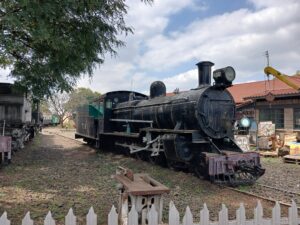
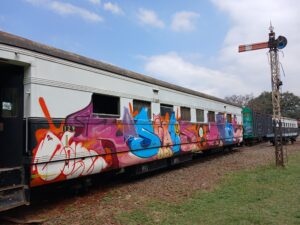
For my research in Nairobi, I visited the National Museum of Kenya and the Nairobi Railway Museum to examine exhibits on the railway, the colonial era, and indigenous African cultures. I visited the library and archives of the University of Nairobi and the British Institute in Eastern Africa, focusing on reference materials about the railway and African landscapes.
At the Kenya National Archives, I focused on Kenya Railways Corporation material, including accounts, correspondence, monthly reports, and legislation. These included the construction reports by the Chief Engineer, George Whitehouse, which will be invaluable for my research. However, three files I requested could not be located, including survey work by Arthur Church. The staff kindly offered to let me know if they locate them in the future. My research was therefore typical of any archival research, involving both fruitful and not-so-fruitful endeavours.
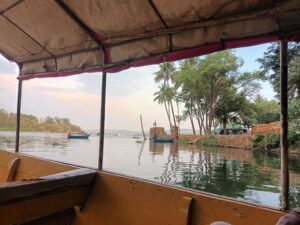
After completing my research in Nairobi, I was invited to spend a few days with an old friend in Uganda. My African journey ended with a boat trip around the Ugandan shore of Lake Victoria to visit the source of the River Nile. The lake has many indigenous names, including Ukerewe in Kiswahili and Nnalubaale in Luganda, which means ‘home of the Gods’, but the British ‘officially named’ it in honour of Queen Victoria during the colonial era. It is a beautiful place, its waters gently lapping the shores of the tropical forest.
Richard and Arthur spent several years in East Africa, returning to Britain only after the First World War. Meanwhile, another brother, Francis, worked on engineering projects in India and the Caribbean. All three brothers made their careers and spent most of their working lives abroad. I only spent a few weeks in East Africa. Even this short time was an experience I shall never forget and one which will inform my research in innumerable ways. I am deeply grateful for the support of my universities, funders, and the British Institute in Eastern Africa, and I am immensely grateful to have received a Small Grant from the Social History Society.
Our job as historians is to interrogate evidence and bring new historical insights to light. We must navigate the complex nature of the past and its colonial legacies. We must do so with the greatest care, attention, and respect. For the histories we investigate carry the stories of the people who lived before us. Investigating their histories reveals how the past informs the present and reminds us that our own lives, the choices we make and the paths we tread – our stories – will be the histories of tomorrow.
[1] The opening paragraphs are inspired by and partially paraphrased from the journal of Richard James Church (1863-1928), who travelled to East Africa along with his brother Arthur Frederick Church (1868-1939) to work on the construction of the Kenya-Uganda Railway. I am a descendant of their brother Francis Henry Church (1865-1928), who worked on engineering projects in India and the Caribbean. I acknowledge the privileged access I have to these family journals. After I complete my research, I will donate them to a public archive for long‑term preservation and access.
 Stephen Dunning (ORCID: 0009-0003-4296-7068) is a doctoral researcher at the University of Exeter, with co-supervision at the University of Southampton. He is affiliated with the British Institute in Eastern Africa (BIEA) and holds a Research Licence from Kenya’s National Commission for Science, Technology and Innovation (NACOSTI). His research is funded by the Arts and Humanities Research Council (AHRC), the South, West and Wales Doctoral Training Partnership (SWWDTP), the Social History Society (SHS), and the Royal Historical Society (RHS).