
Our newly published article for Cultural and Social History advocates for the establishment of an Archive of Australian Youth Culture. We argue that in the archival record, youth as a category of cultural, social, and historical development, is rarely afforded attention for its own sake. Drawing inspiration from innovative projects in Germany and the UK devoted to the history of youth culture, we explore this category in relation to the social role and potential of archives for Australian identity and social cohesion. As we suggest, they are not just spaces preoccupied with the past, but also generative places offering young people an understanding of how their present-day experiences help shape their future and understanding of the social and cultural lives they have led.
Alongside the detail of the article, we want to give some further context to the prompts for our archive imaginary that fills this gap, and for our investment in this idea. First, it is informed by our long-term commitment to research into histories and preservation of youth and popular culture. Second, our work emerges from our own involvement in, affective attachment to and critical perspective on youth cultures. Finally, we are both scholars from outside of Australia, where we now teach with our respective repertoires, researching what is distinctive about this nation’s youth cultures, past and present, and how they have significance.
As we explain, youth cultures, particularly in the post-War era, are of interest to scholars in explorations of agency, creativity and independence, e.g. from the oversight of parents, education or indeed the limits of childhood. Agency, albeit limited, is assessed in relation to the ways in which young people create identities, affording significance to conditions and material not of their own making – such as in music or clothing – or make their own meanings through practices such as language, dancing and the appropriation of space and place. Youth cultures may have spectacular qualities such as Australia’s bodgies or swampies, often associated with popular music forms such as rock and roll or goth.
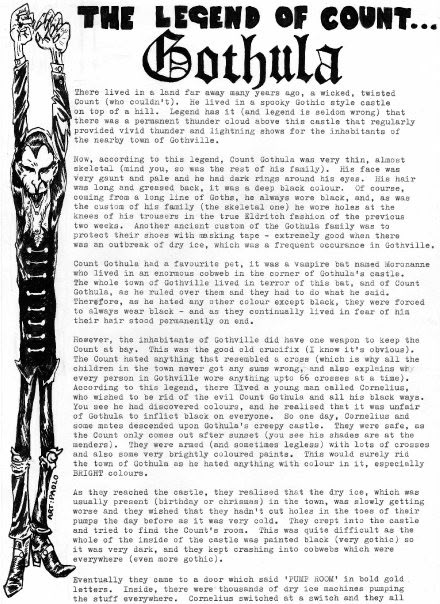
Zine page from Final Conflict by Cathy McManus and author Long (1985)
They may also go unnoticed by ‘outsiders’, attached to practices such as surfing, skateboarding or apparent deviant behaviour, e.g. the ‘eshay’. A key question for historians then, asks: to what degree does this activity have pertinence to understanding the past, whether at the level of social, economic and cultural, or its relationship to both the everyday and historical change?
Our imagined archive is a means of exploring the why, when, what, and how of an Australian youth culture’s tangible artefacts, intangible practices and meanings might be documented, collected and preserved. Such processes involve not only identifying and evaluating material for preservation. Given the ephemeral associations of the attachments of youth culture – of the fleeting moment of youth itself – this process is also one of validation, of making a claim for historical significance and making space for the archive.
An important mode of validation comes from ‘within’, in the way in which historical participants in youth culture themselves memorialise their experiences and preserve artefacts. These resources derive, in the main, from a pre-digital age, taking the form of concert tickets, membership cards for club nights, posters, magazines, or clothing. Photographs, taken by young people of each other (and oneself), are now a major signifier of all aspects of culture. In the pre digital age, even with cheap, disposable cameras, few were likely to be able to produce (let alone afford) the wealth of visual documentation offered by the smart phone, whether of still images or video sequences for social media platforms such as TikTok. As the UK’s Museum of Youth Culture has demonstrated in its gestation, however, curating the handful of photographs held by individuals combined with those of many others creates a rich visual record.
Alongside artefacts, memorialisation is signalled too in enduring tastes, dispositions, continuing friendships and the regular reconvening of community, often in pilgrimages to sites of significance. Author Long has co-curated an exhibition devoted to the Click Club, a venue and nightclub in his hometown of Birmingham, UK, a small but vital site in the city’s creative history.
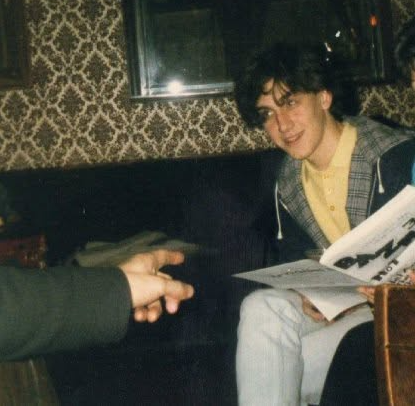
Author Long reading an underground ‘Zine circa 1985.
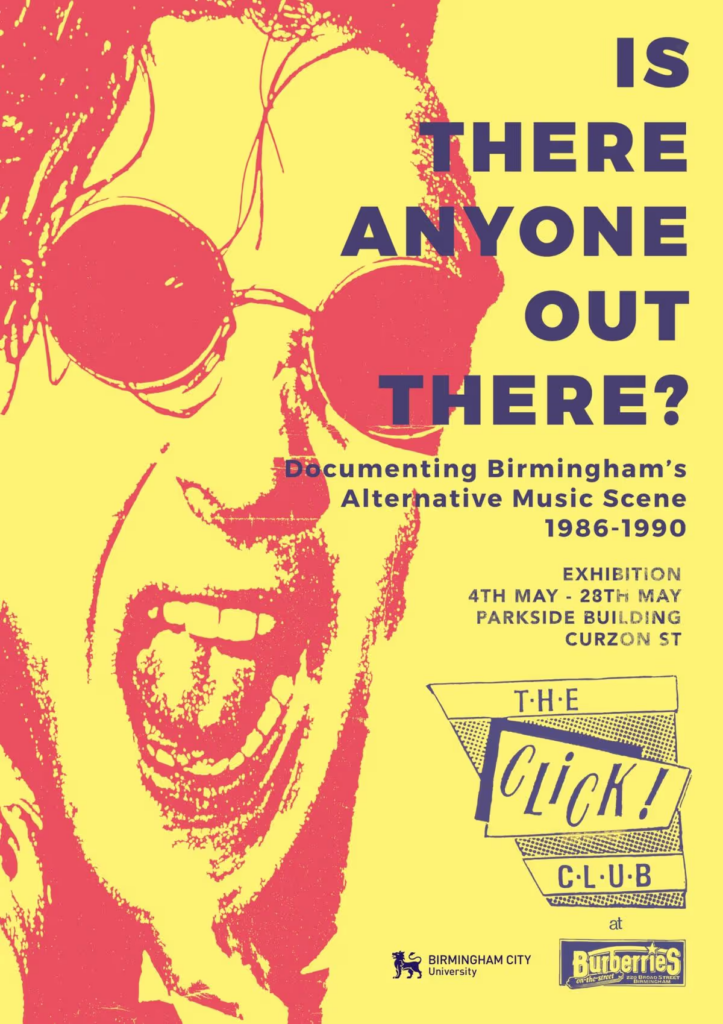
Exhibition poster.
Author Feldman-Barrett recalls the last time she was in Chicago, of visiting the site of Medusa’s – a nightclub that she frequented as a teenager. The club has gone, with the building now given over to condominiums.

Author Feldman-Barrett’s membership card for Chicago nightclub Medusa’s.
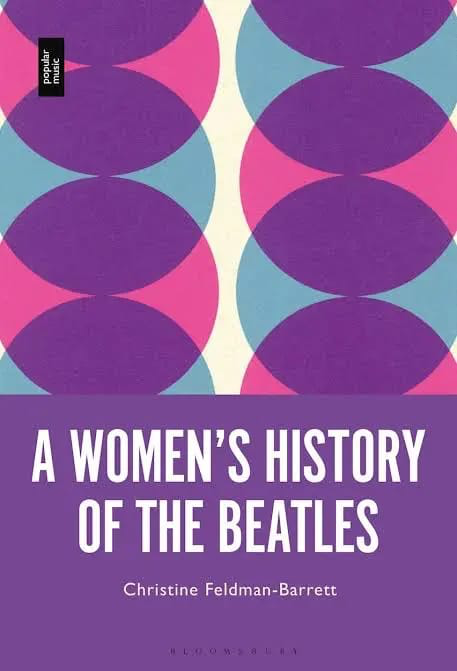
This absence was a prompt for reflection on changes in youth leisure and community. The personal archives, memories and connections to youth maintained by so many, also proved to be an invaluable resource to the historical corrective of Feldman-Barrett’s A Women’s History of the Beatles (2021).
To imagine an archive is to anticipate what kinds of histories, exhibitions and insights into youth culture it might offer. In the Australian context this encompasses the neglected experiences of indigenous youth, interactions with those of settler communities such as the ‘Ten-Pound Poms’, Greeks and Italians who arrived during the decades after the last war – not to mention a myriad of migrants from other points of origin in the decades since. Histories emerging from such groups might relate the connections of youth with global networks of exchange, of power, of transformations in creating a culture of their own amid growing up Australian.
In Australia distinctions between the experiences of cities, regions and remote places are pronounced given the size and topography of the country. This presents challenges for imagining the archive as a physical space. Nonetheless, inspired by the UK’s Museum of Youth Culture and the German Archiv der Jugendkulturen (‘Archive of Youth Cultures’), we conceive of an initiative that is not reliant on the digital, even as we recognize its importance to contemporary youth culture in creative participation in social media or gaming. We celebrate the potential democratisation afforded by the digital, but its value complements the fact that there is much of our heritage (of all kinds) yet to be preserved and valuable for its materiality. As we argue in our paper, the contemporary archive is not allowed to be a repository, awaiting activation, but is under an injunction to perform its value. Our imagining of the archive as a physical site, a third place and space is ultimately an analogue of how we think about youth cultures. They are convened in the interaction of individuals, the creation of meaning and communities of interest – exactly the opportunity to make public value in shared space.
Feldman-Barrett, C. (2018). Medusa’s on Sheffield, 1983–1992: Chicago’s alternative all-ages nightclub in history and memory. Popular Music and Society, 41(3), 319-338.
Feldman-Barrett, C. (2021). A Women’s History of the Beatles. Bloomsbury.
Long, P., & Raine, S. (2020). The meaning of the music venue: Historicizing the Click Club. Popular Music History, 12(1), 55-74. https://doi.org/10.1558/pomh.39558